For years, the Adams County Fair has provided an opportunity to channel that spirit into a popular rugrat rodeo activity – Mutton Bustin’. Mutton Bustin’ will return with the fair in August, but will introduce an exciting new change from previous event formats.

Capital Credits are Coming

Monday | July 2, 2018
Capital credits are just one of the ways United Power is different from other utilities. We’re different because we’re owned by you, our members.

Title
Town of Frederick Citizens Affirm United Power Purchase of Municipal Utility
/sites/default/files/styles/news_card_553x430_/public/news/Frederick_Stories_0.png?h=45932144&itok=9hNcyAGQ
Wednesday | June 27, 2018
Card Teaser
Residents of the Town of Frederick have affirmed the purchase of the Town of Frederick’s municipal utility, which was agreed to earlier by the Town Council and United Power representatives.

Residents of the Town of Frederick have affirmed the purchase of the Town of Frederick’s municipal utility, which was agreed to earlier by the Town Council and United Power representatives. The Town’s website reported that the sale of the Town’s assets was affirmed by residents with a 1,716 to 236 count. Nearly 88% of all voters indicated their support for United Power to purchase the system.

“We are excited about bringing the entire Town of Frederick into the United Power membership,” stated John Parker, United Power CEO. “We want to express our thanks to the citizens of Frederick for their support in this process, and we will be working hard to make this transition a seamless process for them.”

The vote was a key step to finalize the purchase. The two entities agreed upon a purchase price of $18 million, with United Power agreeing to drop its pending lawsuit against the Town in exchange. United Power originally filed suit against the Town in July of 2017, for breach of contract and to recover damages for the Town’s taking of service rights located within United Power’s certificated territory. The suit was filed after an attempt to negotiate a settlement failed in early 2017.

“United Power has assembled a transition team that includes key engineering, operations, and member services personnel to work on this acquisition,” stated Parker. “The citizens of Frederick can be assured that we will work as quickly as possible to complete this project, and we will be working hard behind the scenes to meet all your expectations in regard to this sale.”

The election results will not be official until July 6, 2018, in order to allow for the statute-required length of time for overseas military ballots and signature verification processes to be completed.

United Power Warns of Spam Calls

Wednesday | June 27, 2018
United Power members have reported receiving phone calls from individuals claiming to be representatives of the cooperative and demanding payment for past due account balances.

Title
A Bird's Eye View
/sites/default/files/styles/news_card_553x430_/public/news/June2018_NL_Drone.png?itok=5R4L3l2P
Friday | June 1, 2018
Card Teaser
In 2016, United Power recognized it needed to brainstorm new ways to inspect its infrastructure in a quicker, safer and more efficient manner. Drones were a cheap and effective solution.

Drone%20Graphic.pngWhen the drone (unmanned aerial vehicles, or UAVs) craze took off nearly a decade ago, it was impossible for experts to predict how rapidly impactful the revolutionary technology would become. As sales began to dwarf estimates, professional drone pilots found new and innovative ways to utilize the technology economically, often as a safe and cost-effective alternative to manned aerial operations or underground imaging. 

In 2016, United Power recognized it needed to brainstorm new ways to inspect its infrastructure in a quicker, safer and more efficient manner. 

On a daily basis, electrical poles and cross arms are exposed to various weather conditions, which can cause accelerated decay over time. United Power’s linemen put their lives on the line to regularly ensure lines and poles delivering power to families around the service territory are in the best shape. Even in the best conditions, however, the effort necessary to inspect thousands of poles across thousands of miles of line is immense, if not impossible. 

The idea to incorporate drone technology was first suggested by Mike Robinson, a Safety Specialist with the cooperative, who had been an early adopter of using drones during inspection. 

United Power partnered with Colorado Aerial Imaging, a veteran-owned drone maintenance business with experience in electric line inspection, and began a trial implementation in the Mountain Territory. 

Mountain Territory

Coal Creek is a 215-square mile noncontiguous parcel of land served by United Power. Extending from Golden to the Continental Divide, the Mountain Territory is sparsely populated, requiring lots of line carrying a higher voltage. The higher voltage lines, rugged terrain and severe weather made the Mountain Territory an easy place to begin initial implementation for the drone maintenance program.

With poles perched on cliff sides, in dense forests and at high elevations, inspection is a risky endeavor for linemen in Coal Creek. The time-consuming process also takes a backseat to restoring power during an outage, which can be exacerbated during storms and winter weather. UAVs provide quicker access to hard to reach poles and limit exposure to risk.

“The process of identifying and correcting an issue on a pole in a place like Coal Creek can require multiple hours to complete,” said Chief Operating Officer Bryant Robbins. “If another problem occurs during inspection, the linemen have no choice but to abandon it and return to it later.” 

For linemen in Coal Creek, hiking in and out of an area multiple times to repair poles is not uncommon, but the task is no less daunting in United Power’s larger Plains Territory.

Plains Territory

Colorado Aerial Imaging recently completed its first phase in the Plains Territory near Brighton, with two more phases scheduled for the upcoming months. While the service territory is more favorable for weather and terrain, it still comes with challenges. 

“We try to remain respectful of people’s concerns about privacy and security,” said Don McDaniel, Engineering Director for United Power. “It’s more densely populated, and more of our poles are located on or near private property.”

Since drones eliminate the need for linemen to approach poles during inspection, there’s limited impact to members — no property intrusion or interrupted service — and a sense of respect for their privacy. 

Though linemen on the plains don’t have to hike to and from poles through dense foliage and up steep inclines, the time necessary to inspect poles would be exorbitant. Crews rarely have the ability to devote large parts of their day to inspection across the service territory. 

“We serve some of the fastest growing areas in the Northern Front Range,” said McDaniel. “We have a lot of requests for new service from residential communities and businesses moving in, and not enough linemen to dedicate solely to inspecting poles, as much as we’d like to be able to.”

Other Benefits

“While examining and analyzing pole damages for an area in Coal Creek, we noticed rot along the top of a cross arm,” said Greg Bergin, co-owner of Colorado Aerial Imaging. “From where we were standing, the pole looked to be in fairly healthy condition.”

Because drones are not limited to the area around the pole, they are able to capture images from angles linemen wouldn’t otherwise be able to see. 

“Without physically climbing the pole and inspecting every part of it for damage, we wouldn’t have noticed this damage without the use of drones,” said lineman Adam Dillion. “Some poles may look fine, even from our best vantage points, but the pictures from above tell another story.”

Aerial images obtained from drones are visual, thermal and geotagged, providing a broader, wider and higher view of each pole and piece of equipment. There’s an inherent redundancy built into the program to ensure accurate inspections. 

“Before we ever send out a crew, we are able to determine what tools and materials we’ll need, how many men are required and whether we’ll need to be on someone’s property,” said Dillon. 

To date, Colorado Aerial Imaging has inspected more than 30 miles of line and nearly 800 poles. 

“What may take a line crew more than a day to complete a drone is able to do in less than an hour,” Robbins said. “Our drone program has been a cost-effective way to stay proactive, instead of reactive, to the potential for outages on our lines. The amount of time and risk this program has saved us, and will continue to save us, is incalculable.”
 

Title
Safe Zones Around Pad-Mounted Transformers
/sites/default/files/styles/news_card_553x430_/public/news/June2018_NL_PadTransformer.png?h=45932144&itok=8nsv7dib
Friday | June 1, 2018
Card Teaser
Though pad-mounted transformers may appear safe to use as workbenches and climbing obstacles, electrical equipment can still pose a risk to anyone who may come in contact with it. Members should always use caution and keep a safe distance. 

Pad-mounted transformers, those big green utility boxes commonly seen around town, serve the purpose of lowering high voltage to standard household voltage used to power electronics, appliances and lighting. These transformers are not protected in the way overhead lines and substations are. Though they may appear safe to use as workbenches and climbing obstacles, electrical equipment can still pose a risk to anyone who may come in contact with it. Members should always use caution and keep a safe distance.

United Power crews also need safe access for repairs and maintenance. Barriers, such as landscaping and fencing, should be kept clear of electrical equipment. While it may be tempting to “camouflage” transformers with landscaping, please remember cooperative crews need at least 10-feet of clearance at the opening of a pad-mounted transformer and four-feet at the rear and sides of the housing. The distance allows crews to safely use tools required for working with energized equipment. It also ensures crews have the ability to move about safely should problems arise.

In many newer subdivisions and residential developments pad-mounted transformers are more common – and in many cases are located on consumer property. These transformers are connected to primary high voltage lines, and secondary lines can extend from the transform in several directions underground. Remember this before planting shrubs or trees, setting fence posts, installing sprinkler systems or digging anywhere near a transformer. You should always dial 811 before you dig to ensure lines are located so your project doesn’t disrupt utility service, cause serious injury or worse.

United Power proudly announces the 2018 Scholarship awards. Sixteen different scholarships were granted for a total of $18,500. United Power awards the scholarships each year to outstanding students served by the cooperative.

Title
United Power Lineman to Help Power Guatemala
/sites/default/files/styles/news_card_553x430_/public/news/05_04_2018_Guatemala.png?itok=8ngelyuC
Friday | May 4, 2018
Card Teaser
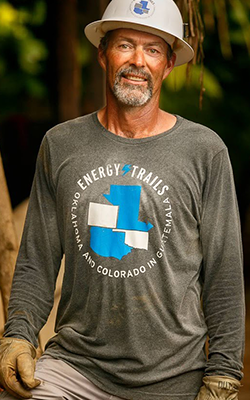
United Power Journeyman Lineman, Kelly Snow, is among seven volunteer linemen selected by the Colorado Rural Electric Association to support a program to help electrify remote communities in northwestern Guatemala this fall.

Kelly_Snow.pngUnited Power Journeyman Lineman, Kelly Snow, is among seven volunteer linemen selected by the Colorado Rural Electric Association to support a program to help electrify remote communities in northwestern Guatemala this fall.

The Colorado crew will join eight linemen from co-ops in Oklahoma on a joint project coordinated through the National Rural Electric Cooperative Association’s philanthropic NRECA International Foundation.

“We’re very excited about this inaugural CREA-sponsored project in Guatemala,” said CREA Executive Director Kent Singer. “Our group includes outstanding co-op linemen, who will volunteer their time and expertise to bring much needed electricity to people and communities who have never experienced it before.”

The volunteers will build power lines in the village of Pie del Cerro and, potentially, in neighboring Tierra Blanca Salinas. Both communities are located far from larger population areas near a rain forest in the Ixcan region, close to the Mexican border. Collectively, the communities have about 100 households, five churches, two elementary schools and two health centers — all without access to reliable and affordable electricity. The local residents live in small one or two room homes without running water, refrigeration or the use of electronic appliances for household chores or business services. Farming is the local industry; they produce corn, beans cardamom seeds, cocoa and vegetables.

A local utility, Empresa Municipal Rural de Electricidad (EMRE), based in Playa Grande, Ixcan, will maintain the power lines once they are built. The project will consist of 130 poles and two transformers on 4.34 miles of primary line and 3.86 miles of secondary line. Most of the terrain will be flat, but about 1 mile of line will be built through dense rain forest growth. Each home will receive at least two light bulbs and two electrical outlets.

“We’re proud to have Kelly representing United Power on this very worthy project,” said Bryant Robbins, Chief Operations Officer. “Electrifying rural communities is the foundation that electric cooperatives were formed, and it’s part of our ongoing commitment to communities around the world.”

A selection committee consisting of CREA staff members and two board members from CREA’s Colorado Electric Educational Institute interviewed applicants and selected six co-op linemen and two alternates for the trip. The seventh spot will be filled by CREA Director of Safety and Loss Control Dale Kishbaugh.

“Thanks to all of the linemen who were interested in participating in this trip,” Singer said. “It is great to see how many of our co-op family were willing to leave their homes for an extended period for such a grueling trip to help others in another country. This project will bring economic possibilities to these villages, as well as better access to education and enhanced safety and lifestyles.”

Volunteers selected for the project include: Christian Baker, Holy Cross Energy, Glenwood Springs,Springs; Kris Barbee, Southeast Colorado Power Association, La Junta; Ben Ludington, Poudre Valley Rural Electric Association, Fort Collins; Kelly Snow, United Power, Brighton; Chet Stickler, Holy Cross, Glenwood Springs; and Nate Towne, Mountain Parks Electric, Granby.

Alternates are Chris Stanworth, White River Electric; and Baker McKonly, La Plata Electric Association, Durango.

CREA is the statewide trade association for Colorado’s 22 electric cooperatives and Tri-State Generation and Transmission Association.